
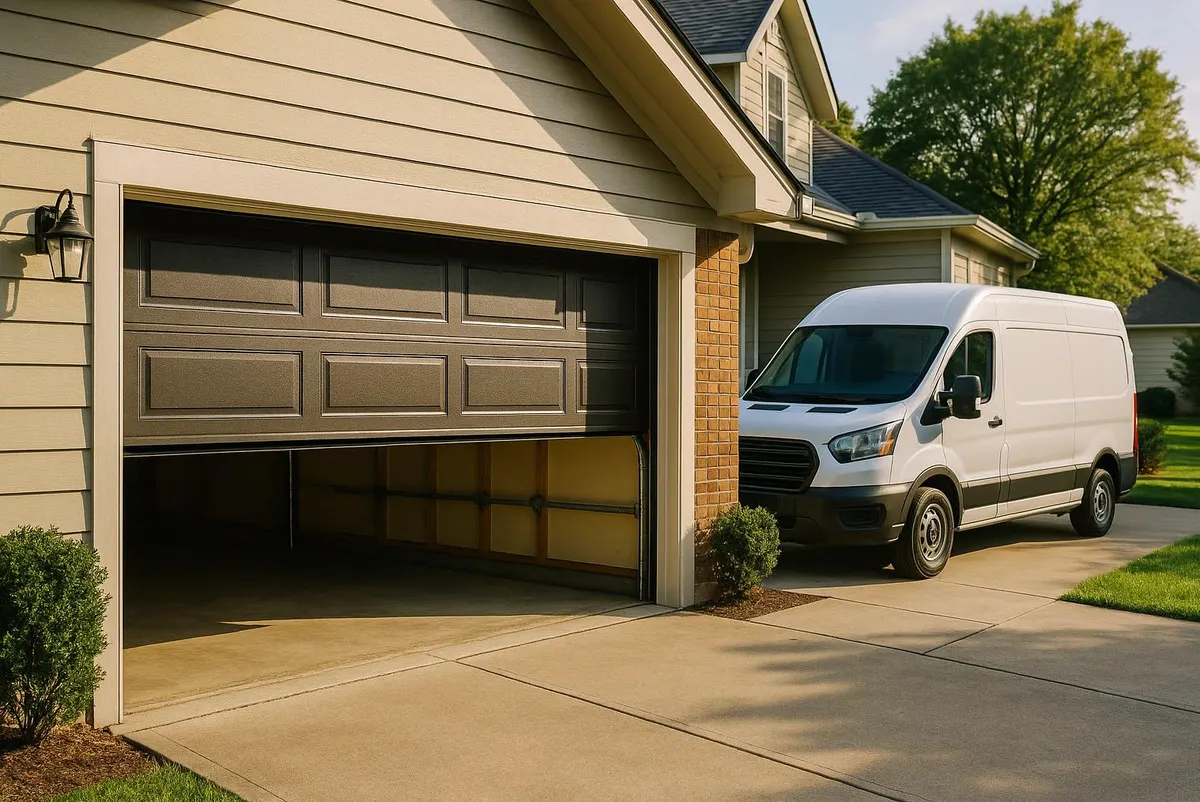
The Moment You Notice It
You're standing in the garage, finger on the button, and the door comes down the way it always has—no pause, no blink of light from sensors that don't exist, just a slow grinding descent until it thuds into the slab. Your spouse says it's fine, it's always been fine. You're not so sure. This is the argument almost every house with an original 1990s-or-older door eventually has, and there's actually a clear way to settle it.
The Real Question Isn't Old vs. New
It's safety vs. nostalgia. Some parts of an old garage door are genuinely dangerous by today's standards. Others are just old, and replacing them is a matter of preference, not safety. Knowing which is which turns the argument into a checklist instead of a standoff.
What Needs to Be Retrofitted, No Exceptions
- Photo-eye sensors. If your opener doesn't have two small sensors mounted a few inches off the floor on either side of the track, the door has no way of knowing a child, pet, or object is in its path before it closes. This became standard safety equipment industry-wide decades ago, and any opener without it should be replaced or retrofitted immediately, no debate.
- Extension spring containment cables. If your door uses extension springs (the long stretched springs running along the horizontal track, not torsion springs mounted above the door), check whether a cable runs through the center of each spring. Without it, a spring that snaps under tension becomes a projectile. This is a cheap, fast retrofit and one of the few things worth doing this week, not this year.
- Auto-reverse function. Place a 2x4 flat on the ground where the door closes. If the door doesn't reverse on contact, the force-adjustment mechanism is either failing or was never installed to current standards. That's not a cosmetic issue.
What's Worth Upgrading for Where You Live
- Battery backup on the opener. Afternoon storms in hurricane season knock out power regularly, and a door that won't open manually in a hurry is a real inconvenience when you need to get a vehicle out. Newer openers with battery backup solve this.
- Weatherstripping and bottom seals. Humidity and swelling are constant here. If the bottom seal is cracked or the door doesn't sit flush, you're inviting moisture, pests, and eventually rust into the track hardware. This is a low-cost swap that pays off every rainy season.
- Wind-rated panels, if you're replacing anyway. If a panel is already damaged and due for replacement, choosing one built to current wind-load standards makes sense for coastal storm exposure. You don't need to replace a sound door just to get this, but it's worth factoring in when the time comes.
What You Can Leave Alone
- Solid wood or heavy steel panels that are still straight and rust-free. Old doesn't mean weak. If the panels show no sagging, no rust-through, and no cracking, there's no safety reason to replace them for age alone.
- Manual mechanisms that still work smoothly. A hand-crank emergency release or an older but well-maintained torsion spring system isn't inherently unsafe if it's lubricated and balanced correctly.
- Tracks that are aligned and quiet. If the door runs true with no grinding or binding, there's no need to replace tracks just because they're original.
The Five-Minute Test to Settle It
- Look for photo-eye sensors near the floor on both sides of the track.
- Check extension springs for a containment cable running through the coil.
- Test auto-reverse with a 2x4 or similar object.
- Lift the door halfway by hand—it should stay put, not crash down or fly up (that's a spring balance problem).
- Check the bottom seal for cracking or gaps.
If it fails any of the first three, that's not a style preference anymore—that's a repair to schedule this month.
When to Call Bonita Springs Garage Door Repair
If the sensor test or the spring check comes back wrong, or the door doesn't reverse, call us before you use the door again. We handle garage door spring repair for exactly this situation—replacing unsafe extension springs with properly contained ones or correcting a torsion spring that's lost its balance—and we install modern openers with photo-eye sensors and battery backup built in, which solves most of the 1990s-door problems in one visit.
If you're in Bonita Springs, Estero, Naples, or anywhere nearby and want a straight answer about what your door actually needs, call Bonita Springs Garage Door Repair for same-day service and a technician who'll tell you honestly what to fix and what to leave alone.