
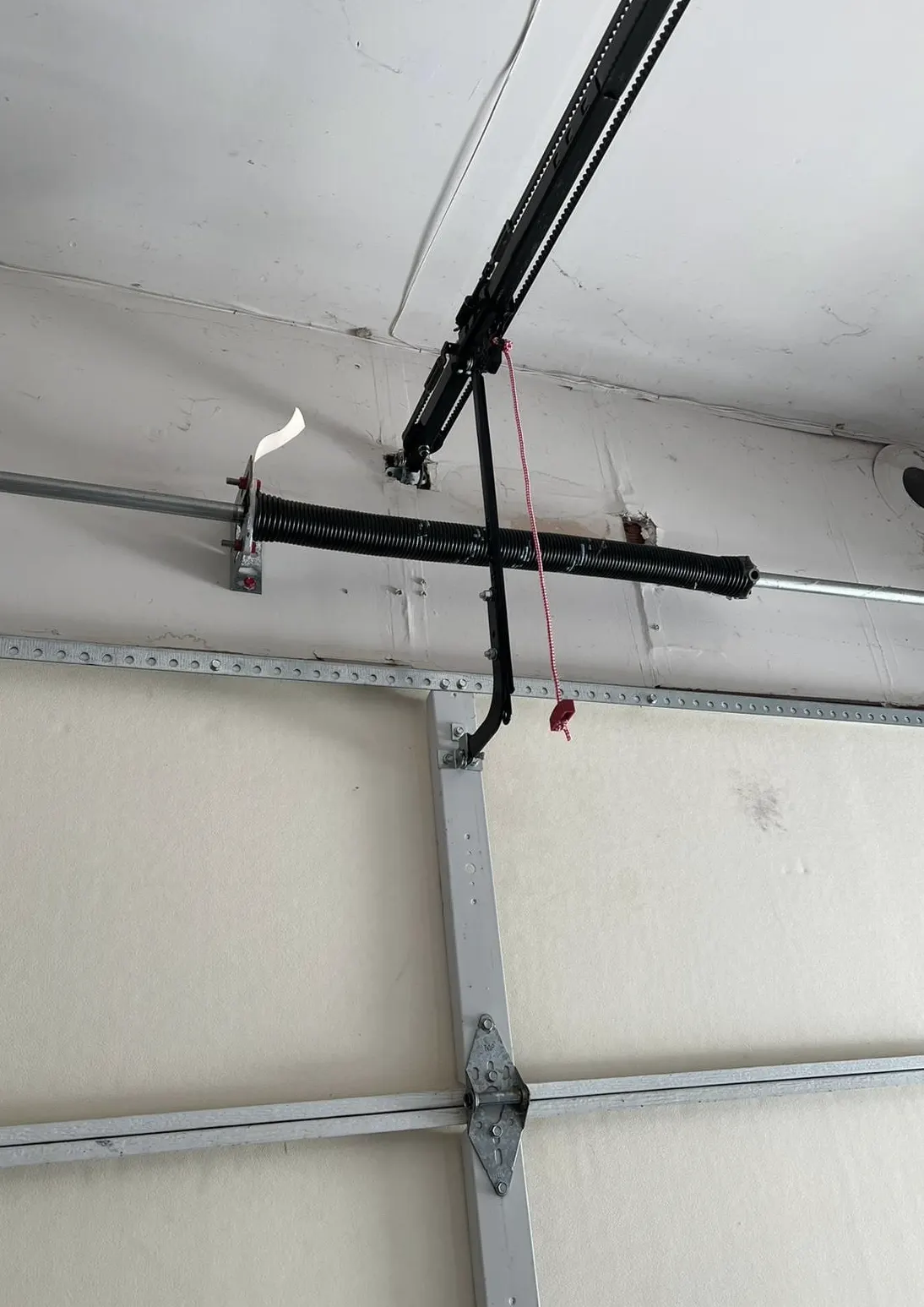
What a Technician Sees on a Typical Call
The pattern is familiar: an opener that used to run quiet now grinds through every cycle, the homeowner says it "just started happening," and the logic board has already logged a string of force adjustments the previous owner or installer made to compensate. Nine times out of ten, the real issue isn't the opener at all. It's a door that's out of balance, and the opener has been straining against that extra weight for months, sometimes years, before something finally gives — a stripped gear, a snapped spring, a drive belt that jumps its track.
In Bonita Springs, this shows up faster than in drier climates. Humidity swells wood-composite panels, salt air accelerates corrosion on spring coils and cable ends, and a door that was balanced last winter can be noticeably heavier by summer. An opener motor sized for a 120-pound door doesn't know the door now weighs 150. It just keeps pulling, and that strain shortens the life of every component downstream.
What an Unbalanced Door Does to the Opener
A balanced garage door should feel nearly weightless when you lift it by hand — the springs are doing almost all the work. When a door is unbalanced, the opener's motor and gears take on the load the springs should be carrying. Over time that means:
- Faster wear on the drive gear, chain, or belt
- Overheating, which trips thermal shutoffs on hot days
- Force settings creeping higher, which makes the safety reversal system less reliable
- Shortened motor lifespan, sometimes cutting years off a unit rated for a decade or more
This is especially relevant during hurricane season, when wind-rated hardware adds weight to a door and homeowners lean on their opener more often to seal up before a storm. An opener already compensating for poor balance has less reserve capacity when you need it most.
Tools You'll Need
- A step stool or ladder, if your door release is high
- Work gloves
- A pen and paper to note timing or position
- Optional: a tape measure, if you want to track exact height
Step-by-Step: Testing Garage Door Balance
- Close the door completely. Start from a fully closed position so your baseline is consistent.
- Locate the manual release cord. This is the red-handled rope hanging from the trolley on the opener rail. Pulling it disconnects the door from the opener so you're testing the door and springs alone, not the motor.
- Pull the release cord to disengage the opener. You should hear a click, and the trolley will separate from the chain or belt drive.
- Lift the door manually about halfway. Use both hands and lift slowly and steadily, not with a jerk.
- Let go and observe. A properly balanced door will stay roughly in place, drifting down or up only a few inches. A door that slams down or shoots upward on its own is unbalanced, and the direction tells you something: a door that falls is too light on spring tension, one that flies up is over-tensioned.
- Repeat at the one-quarter and three-quarter positions. Balance can be fine at the midpoint but off elsewhere, particularly with doors that have sagged or warped slightly.
- Reconnect the opener. Pull the release cord again (or follow your opener's reconnect procedure) and run the door through a normal open-close cycle. Listen for grinding, hesitation, or a motor that seems to labor harder on the way up than it did when the door was new.
What a Homeowner Can Safely Do — and What Can't
Everything above — the manual lift test, listening for strain, checking the door at multiple heights — is safe and appropriate for a homeowner to do. It takes ten minutes and tells you clearly whether something is wrong.
What's not a DIY job is fixing it. Torsion springs store enormous tension and are wound or adjusted with specialized bars; extension springs and their safety cables carry their own risks. If your test shows the door is unbalanced, the fix is spring adjustment, replacement, or cable work — not something to attempt with pliers and a ladder. This is also where coastal conditions complicate things: springs that look fine can be corroded internally from salt air exposure, and a spring that fails mid-adjustment can cause serious injury.
When to Call Bonita Springs Garage Door Repair
If your manual lift test shows the door dropping, jumping, or feeling noticeably heavier than it used to, call us before the opener takes more damage. Our technicians carry out full Garage Door Spring Repair with proper tensioning for local humidity and wind-load hardware, and we offer Preventive Maintenance & Tune-Ups that catch corrosion and balance drift before they turn into a dead opener or a dropped door. If you're already hearing grinding or the opener is struggling, we'll check both the springs and the motor so you're not just treating the symptom.
If your garage door feels off balance or your opener has started working harder than it should, call Bonita Springs Garage Door Repair for fast, same-day service across Bonita Springs, Naples, Estero, and the surrounding area. We'll get it running right — and keep it that way through storm season.